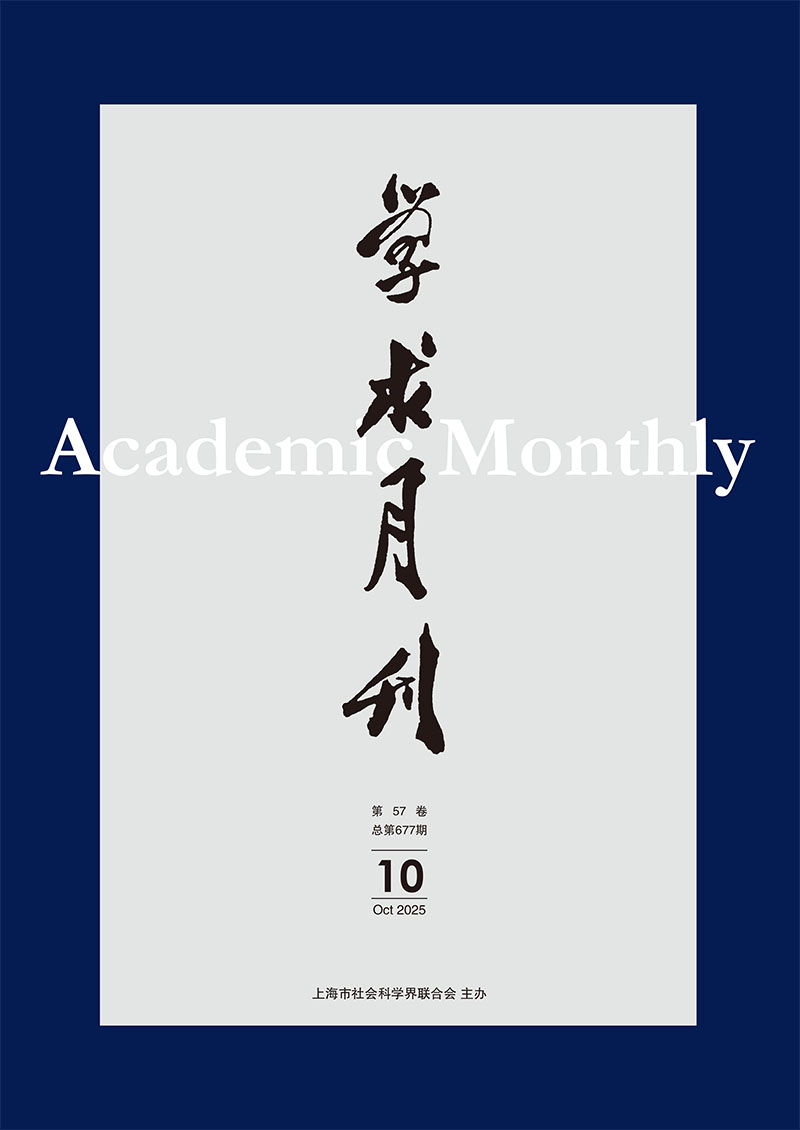
Welcome to visit ACADEMIC MONTHLY,Today is

Volume 57 Issue 10
November 2025
Article Contents

Citation: JIAO Deming. 'Chinese Language Philosophy' or 'Gongfu Philosophy'——The Debate between 'Discourse' and 'Silence' in the Future Form of Chinese Philosophy[J]. Academic Monthly, 2025, 57(10): 47-60. shu

"Chinese Language Philosophy" or "Gongfu Philosophy"——The Debate between "Discourse" and "Silence" in the Future Form of Chinese Philosophy

  • Against the backdrop of Chinese philosophy "taking the stage", the comparative significance of "Chinese language philosophy" and "Gongfu philosophy" becomes prominent. Chinese language philosophy can be understood in both a broad and narrow sense. The narrow sense of Chinese language philosophy, with its "linguistic determinism", fails to fully account for the multiplicity of elements beyond language categories. Its "particularist" stance centered on the Chinese language falls into the tension between universality and particularity and overly optimizes modern Chinese, which has been contaminated by code-switching. The narrow sense of Chinese language philosophy forms multiple tensions with the Gongfu tradition in Chinese philosophy:The social function of Chinese philosophy has primarily emphasized self-cultivation rather than public debate. The cultural emphasis on spiritual cultivation in Chinese philosophy cannot be reduced to a singular linguistic explanation. Language struggles to address the "noumenon" of Gongfu philosophy from the perspective of meaning. Thus, Chinese language philosophy and Gongfu philosophy represent distinct philosophical forms of "discourse" and "silence". Gongfu philosophy, as a cultural philosophy, aligns with post-linguistic philosophical calls. It resonates with postmodern culture's revival of spirituality to redefine "philosophy". This necessitates that Chinese language philosophy confront the Gongfu tradition. However, Gongfu philosophy itself must rely on language, concepts, and logic for its expression while integrating linguistic analysis. By using Chinese as a medium to unveil the lifeworld of Chinese spiritual cultivation, Gongfu philosophy explores self- expression within the broad framework of Chinese language philosophy. It supplements the latter by enriching practical philosophy, reflecting on Enlightenment philosophy, and clarifying cultural significance. The future of Chinese philosophy requires a fusion of "discourse"(Chinese language philosophy) and "silence"(Gongfu philosophy).
  • 加载中

Article Metrics

Article views: 283 Times PDF downloads: 2 Times Cited by: 0 Times

Metrics
  • PDF Downloads(2)
  • Abstract views(283)
  • HTML views(38)
  • Latest
  • Most Read
  • Most Cited
        通讯作者: 陈斌, bchen63@163.com
        • 1. 

          沈阳化工大学材料科学与工程学院 沈阳 110142

        1. 本站搜索
        2. 百度学术搜索
        3. 万方数据库搜索
        4. CNKI搜索

        "Chinese Language Philosophy" or "Gongfu Philosophy"——The Debate between "Discourse" and "Silence" in the Future Form of Chinese Philosophy

        Abstract: Against the backdrop of Chinese philosophy "taking the stage", the comparative significance of "Chinese language philosophy" and "Gongfu philosophy" becomes prominent. Chinese language philosophy can be understood in both a broad and narrow sense. The narrow sense of Chinese language philosophy, with its "linguistic determinism", fails to fully account for the multiplicity of elements beyond language categories. Its "particularist" stance centered on the Chinese language falls into the tension between universality and particularity and overly optimizes modern Chinese, which has been contaminated by code-switching. The narrow sense of Chinese language philosophy forms multiple tensions with the Gongfu tradition in Chinese philosophy:The social function of Chinese philosophy has primarily emphasized self-cultivation rather than public debate. The cultural emphasis on spiritual cultivation in Chinese philosophy cannot be reduced to a singular linguistic explanation. Language struggles to address the "noumenon" of Gongfu philosophy from the perspective of meaning. Thus, Chinese language philosophy and Gongfu philosophy represent distinct philosophical forms of "discourse" and "silence". Gongfu philosophy, as a cultural philosophy, aligns with post-linguistic philosophical calls. It resonates with postmodern culture's revival of spirituality to redefine "philosophy". This necessitates that Chinese language philosophy confront the Gongfu tradition. However, Gongfu philosophy itself must rely on language, concepts, and logic for its expression while integrating linguistic analysis. By using Chinese as a medium to unveil the lifeworld of Chinese spiritual cultivation, Gongfu philosophy explores self- expression within the broad framework of Chinese language philosophy. It supplements the latter by enriching practical philosophy, reflecting on Enlightenment philosophy, and clarifying cultural significance. The future of Chinese philosophy requires a fusion of "discourse"(Chinese language philosophy) and "silence"(Gongfu philosophy).

          HTML

        目录

        /

        DownLoad:  Full-Size Img  PowerPoint
        Return