Citation:
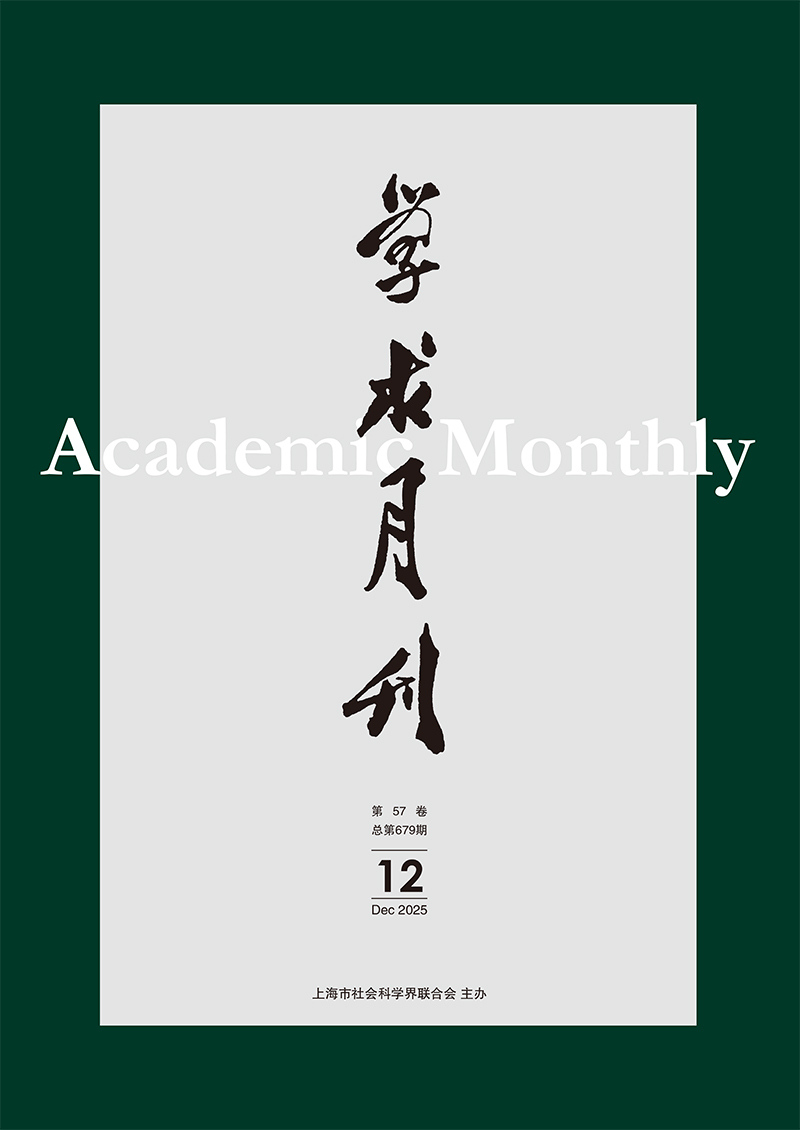
LIU Zixi and CENG Jingwen. Why Love Ends:The Psychologization of the Self and the Critique of Emotional Capitalism[J]. Academic Monthly, 2025, 57(12): 114-125.

Why Love Ends:The Psychologization of the Self and the Critique of Emotional Capitalism
-
Abstract
Eva Illouz's profound inquiry in The End of Love-"Why have we stopped loving?" —is situated within her expansive theoretical framework of critiquing emotional capitalism critiques.Through a systematic examination of her work,this paper contends that the role of psychology in shaping models of selfhood and social interaction constitutes a central thread in understanding the emergence of emotional capitalism.Building on this premise,the study adopts the concept of the "psychologization of the self" as an analytical entry point.It traces the socio-historical conditions underpinning the psychologization of society,examines how this process contributes to the formation of subjectivities compatible with emotional capitalism,and ultimately links these developments to the proliferation of negative social relations.By integrating psychological discourse,critical theories of modernity,and Illouz's nuanced observations on contemporary intimacy,this research not only engages with the enduring sociological problem of "the individual and society," but also offers a theoretical framework for grasping the distinctive characteristics of emotional modernity within the Chinese context.
-

-
References
-
Access
-
-
[1]
SHEN Yifei
. Theoretical Genealogies of the Emotional Economy and the Chinese Context. Academic Monthly,
2026, 58(7): 129-142.
-
[2]
ZHANG Jun
, FANG Hongsheng
. Intergovernmental Fiscal Relations and Economic Growth. Academic Monthly,
2026, 58(8): 70-90.
-
[3]
ZHAO Lin
, ZHANG Boyu
, LIANG Hua
. The Relationship Between Monopoly and Innovation in Information Product Markets——A Growth Network Perspective. Academic Monthly,
2026, 58(7): 64-76.
-
[4]
LIU Fengjie
. “The Flower's Color Become Lucid Immediately”——The Aesthetic Implications and Modern Reverberations of Wang Yangming's “Mind-Thing Relationship”. Academic Monthly,
2026, 58(1): 180-193.
-
[5]
LEI Lei
. Methodological Standpoint of Digital Jurisdiction: Functionalism, or Normativism?. Academic Monthly,
2026, 58(1): 108-119.
-
[6]
XIONG Changkun
, ZHANG Ziyuan
. Multi-party Game and Informal Governance in Central-Local Fiscal Relations——Focusing on the Yinhao Reform of Guangdong Salt Tax in the Early Republic of China. Academic Monthly,
2026, 58(5): 198-210.
-
[7]
NI Liangkang
. The Philosophy of History of “New Idealism” after Hegel: Neo-Hegelianism. Academic Monthly,
2026, 58(7): 12-22.
-
[8]
HE Lei
. What Is Kant's “Problem of the Thing-in-Itself”——With a Concurrent Critique of Mou Zongsan's Assertion and Li Minghui's Defense. Academic Monthly,
2026, 58(3): 31-40.
-
[9]
LU Mingjun
. Simulacra, Pattern Recognition, and Computational Formalism——Reflections on the Application of AI in Artistic Practice and Art History Research. Academic Monthly,
2026, 58(8): 41-55.
-
-


 沪公网安备 31010102003103号
 DownLoad: